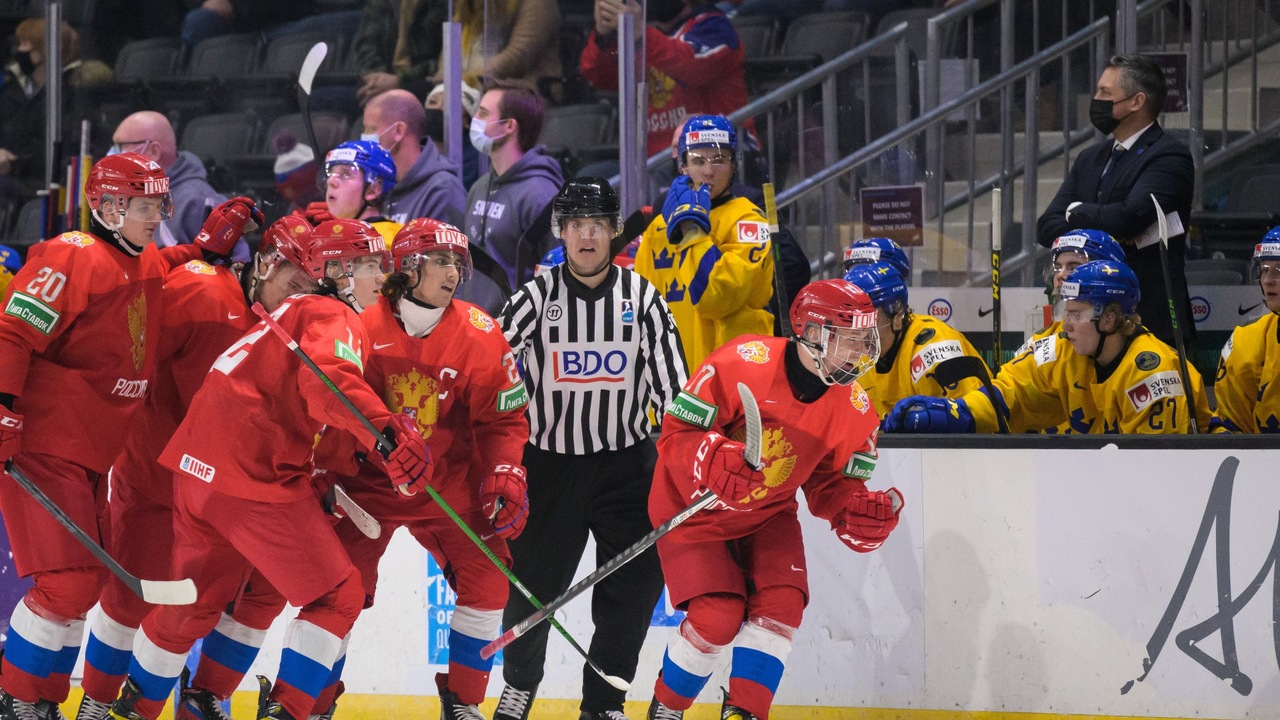
The revised tournament setup for the World Juniors landed in the federations’ inboxes on Saturday. Norway opened it and found that it was no longer in the tournament.
Russia has been slotted in as the tenth nation, and Norway, the lowest-ranked team in the field, has been moved down to Division 1A. The tournament starts in Edmonton and Red Deer in 48 days, and Canada’s prime minister has already said the Russians will not be allowed into the country to play.
What Norway actually said
The announcement came from the Norwegian Federation itself, in a statement on Sunday headlined, in Norwegian, “Russia is placed in the U20 World Championship at Norway’s expense.”
The federation says the IIHF must act on the Court of Arbitration for Sport ruling of 30 October, which overturned the ban imposed after the invasion of Ukraine, and that reintegrating Russia means adjusting the championship structure. Russia becomes nation number ten. Norway goes down.
Norway did not accept that the matter is closed. General secretary Petter Salsten said the federation is waiting on further information from the IIHF in the coming days, and that he hopes the last word has not been said about Norway’s participation in Canada in December. He also repeated Norway’s position that Russia should not be competing internationally while the war continues, and noted that an immediate reinstatement is precisely what exposes the practical problems for everyone involved.
Norway, it is worth remembering, was one of the six federations that had already said it would refuse to play Russia at all. It has now been removed from a tournament it had qualified for, in favor of the team it said it would not face.
The countries know, the public does not
The only reason anybody outside the sport knows about this is that Norway said so. The IIHF has announced nothing.
Its own statement on Belarus and Russia, published on the same Saturday the letters went out, went no further than saying it is taking the steps the ruling requires while reviewing what conditions would need to be met, and that it is “exploring all available avenues.” It did not mention Norway. It did not mention a tenth nation. The same statement kept Belarus out of both 2027 championships, on the grounds that its disciplinary board found no legal basis to order immediate reintegration.
For what it is worth, the groups as they stood had Norway in Edmonton alongside Canada, Czechia, Switzerland and Latvia, with Finland, Germany, Slovakia, Sweden and the United States in Red Deer. If Russia has inherited the vacated place, it has inherited that half of the draw, and the problem we laid out last week arrives on schedule.
Can Russia even get into Canada?
On the government’s stated position, no, and this is the part that makes the whole exercise strange.
Prime Minister Mark Carney was asked about it on 3 November and left little room for doubt. “So if you’re asking specifically about the world juniors, the Russians will not be there,” he said, adding that while Russia and Belarus continue the war in Ukraine, “there will be none of those athletes competing for their countries in Canada.” He framed it as Canada’s own call: “We respect the decisions of the Finns, the Czechs, the Swedes, other nations, but this is a decision we take on our own.”
The federal statement that day said Ottawa would use its immigration powers to stop Russian and Belarusian athletes and officials from entering Canada to compete under their national symbols, while stressing that the measure “is not directed at the Russian and Belarusian people.” Entry would be assessed case by case, and athletes competing as neutrals were not ruled out.
The pressure is not only political
Six of the sixteen nations in the men’s world championship pool have now committed to refusing Russia: Finland, Sweden, Norway, Latvia, Denmark and Czechia, with Austria still deciding. Sweden’s Anders Larsson, who had said a boycott was not on the table, reversed course and confirmed the national team will not play Russia at the upcoming World Championships.
The money is moving too. Skoda’s position on the World Championship is the most visible case, and Nokian Tyres has said continuing its sponsorship if Russia takes part “would not be aligned with our values,” while a Swedish sponsor of nearly four decades has asked for its logo to be taken down. Germany’s federation, which hosts the men’s worlds in May, has raised the prospect of not hosting at all.
Read more: